

Figure 6: Elena Mozhvilo. ca. 2021. No title
Week 2
This week’s content concerning creativity, has boosted many thoughts in my mind. I remember being totally confused when a teacher of mine was talking about creativity, supporting that not all of us can be creative, because creativity entails something totally new, something totally innovative. At that moment I felt that my belief that I am a creative person, just fell apart.
So, this week I got back to thinking in depth what creativity really means to me. What I believe is that creativity is an everyday process that we all go through, no matter what our profession or level of education is, and a skill that can be developed. Sometimes creativity is believed to be identical to arts, but that is only a part of it. Creativity is also present in science, engineering, business, even in everyday life. There are several definitions of creativity, but as far as events are concerned, ‘creativity is more about how we approach and engage with the event content that we are designing and crafting, and curating, all the way through to how we deliver the event itself’, as Claire Eason Basset states (Bassett 2018).
I consider my profession, Marketing, as a creative area in business and this week’s content led me to try to form some clear answers to why I perceive marketing as such. I find that, in my everyday working life, I am being creative in two ways; firstly, in all job-related tasks such as creating POP material together with graphic designers, or inventing a totally new foodservices concept that will be turned into a store, and secondly, in dealing with urgent situations, problems or challenges and finding alternative ways to approach them and provide solutions.
That’s how I started wondering how I might transfer my creativity to the events industry, as an events professional after graduating from the MA. An idea that inspired me, from Julie Burstein’s Ted talk, is that in order for our creativity to flourish, we have to pay attention to the world around us. As she explains, ‘creativity grows out of everyday experiences’. To me, this means that in order to find inspiration and be creative, we really need to look around, to ‘look outside of the window’ as we did in week 1, and see for example what the market wants, what our attendees expect from the event, why they are coming. Maybe that is the way to ‘capture and engage the audience with a positive and meaningful experience’ (Getz and Page 2016: 261).
Also, just as we do in Marketing, examining the competition and using tools like SWOT analysis to identify threats that could turn into problems, as well as opportunities for growth, could be useful for event practitioners. Learning from, and embracing, failure is also a major aspect of the process of creativity. Going through the whole event process after its completion and evaluating where we did well and where not, helps us as event professionals to determine our future practice.
As perfectly stated in Burstein’s Ted talk and also in the following picture, sometimes creativity is about picking up the pieces and making something new (Burnstein 2012).
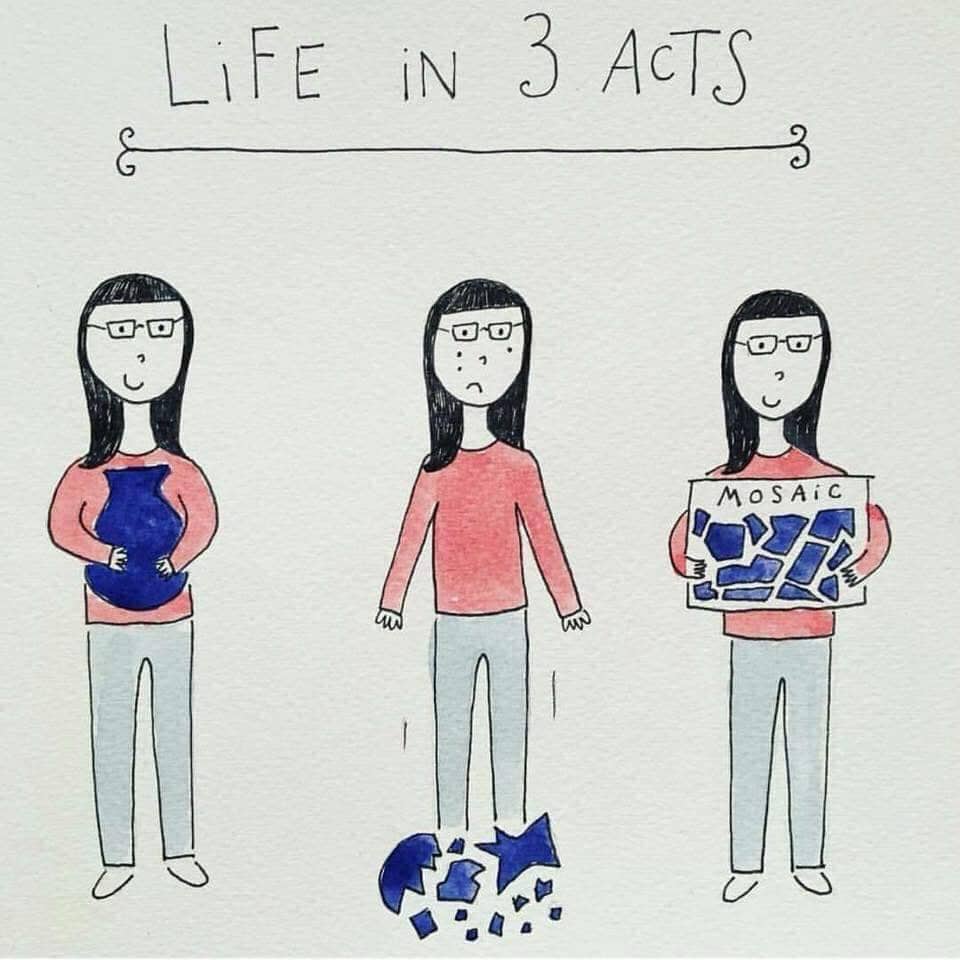
Figure 12: Unknown maker. ca. 2019. Life in 3 acts
List of figures
Figure 12: Unknown maker. ca. 2019. Life in 3 acts. psychologynow.gr [online] Available at: https://www.psychologynow.gr/psyxologia-texni/psyxoapotypomata/7386-psyxoapotypomata-i-zoi-einai.html?fbclid=IwAR3-V8M_7ly_tUnivFbgLVHTwNo-Om-ZLYdCQmFRDf-URECz25rHaHOJdg8 [accessed 17/03/2022]
References
BASSETT, Claire Eason. 2018. ‘In conversation’ [lecture]. Falmouth: Falmouth University, 2018
BURSTEIN, Julie. 2012. ‘4 lessons in creativity’ [online lecture]. TedTalks. Available at: https://www.ted.com/talks/julie_burstein_4_lessons_in_creativity [accessed 5 March 2022]
GETZ, Donald and Stephen J. PAGE. 2016. Event studies: theory, research, and policy for planned events. 3rd edn. Oxon: Routledge